The best knife sharpeners for home cooks range from simple honing rods to angle-guided systems and water stones. Choose by the blades you maintain, how much control you want, and whether you need quick touch-ups or full edge repair.
Quick Top Products
Work Sharp MK2 Electric Knife Sharpener
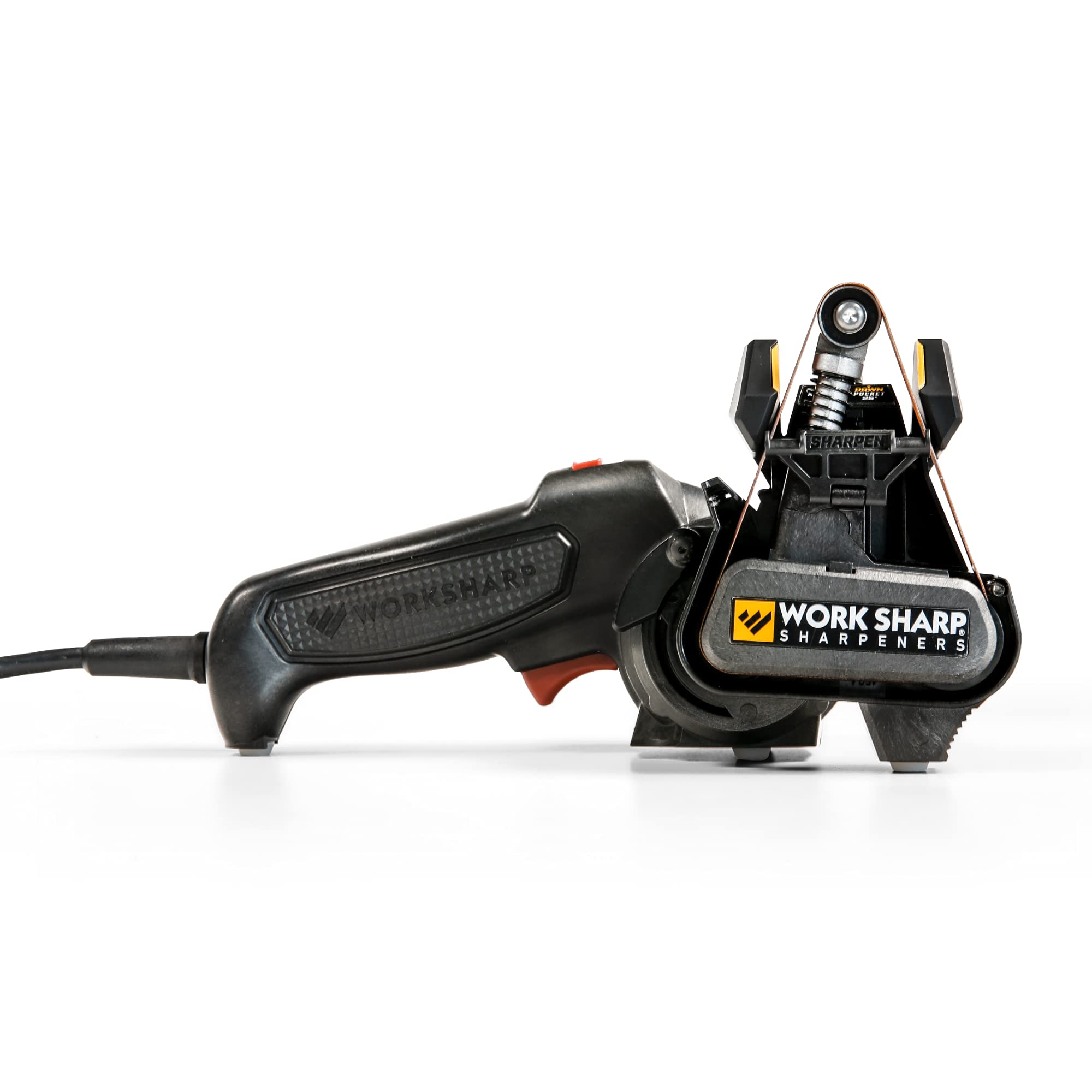
- Two speeds support control across sharpening and grinding tasks.
- Flexible belts work with knives, scissors, and outdoor tools.
- The edge guide supports the blade toward its tip.
Best For: Home cooks and tool owners who want one powered system for kitchen knives and outdoor edges.

Work Sharp Precision Adjust Knife Sharpener Kit
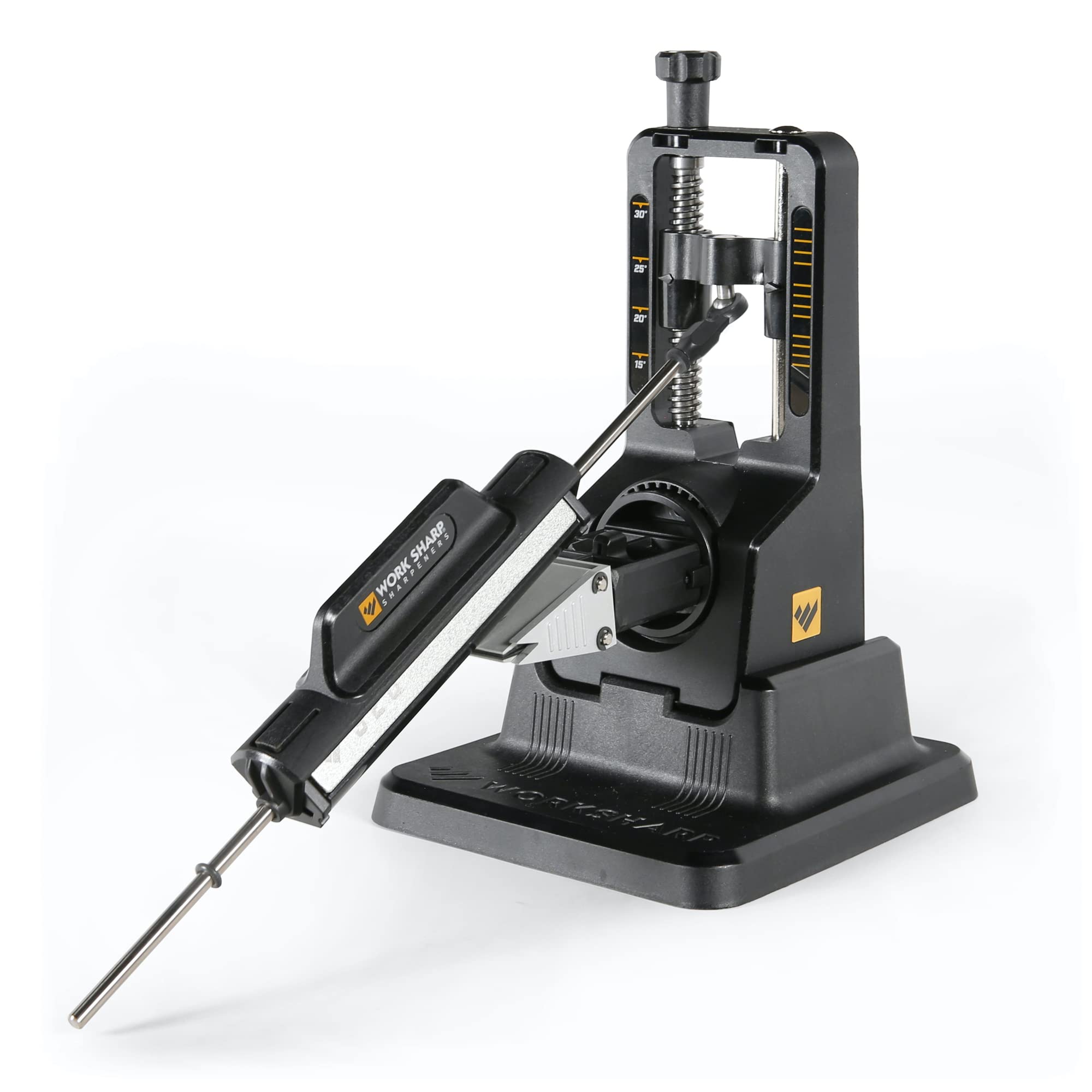
- Angle adjusts from 15 to 30 degrees in one-degree steps.
- A three-sided abrasive rod switches between diamond and ceramic surfaces.
- A clamp secures the knife during sharpening.
Best For: Cooks and pocket-knife owners who want repeatable manual angle settings.
Sharp Pebble 1000/6000 Grit Whetstone Kit
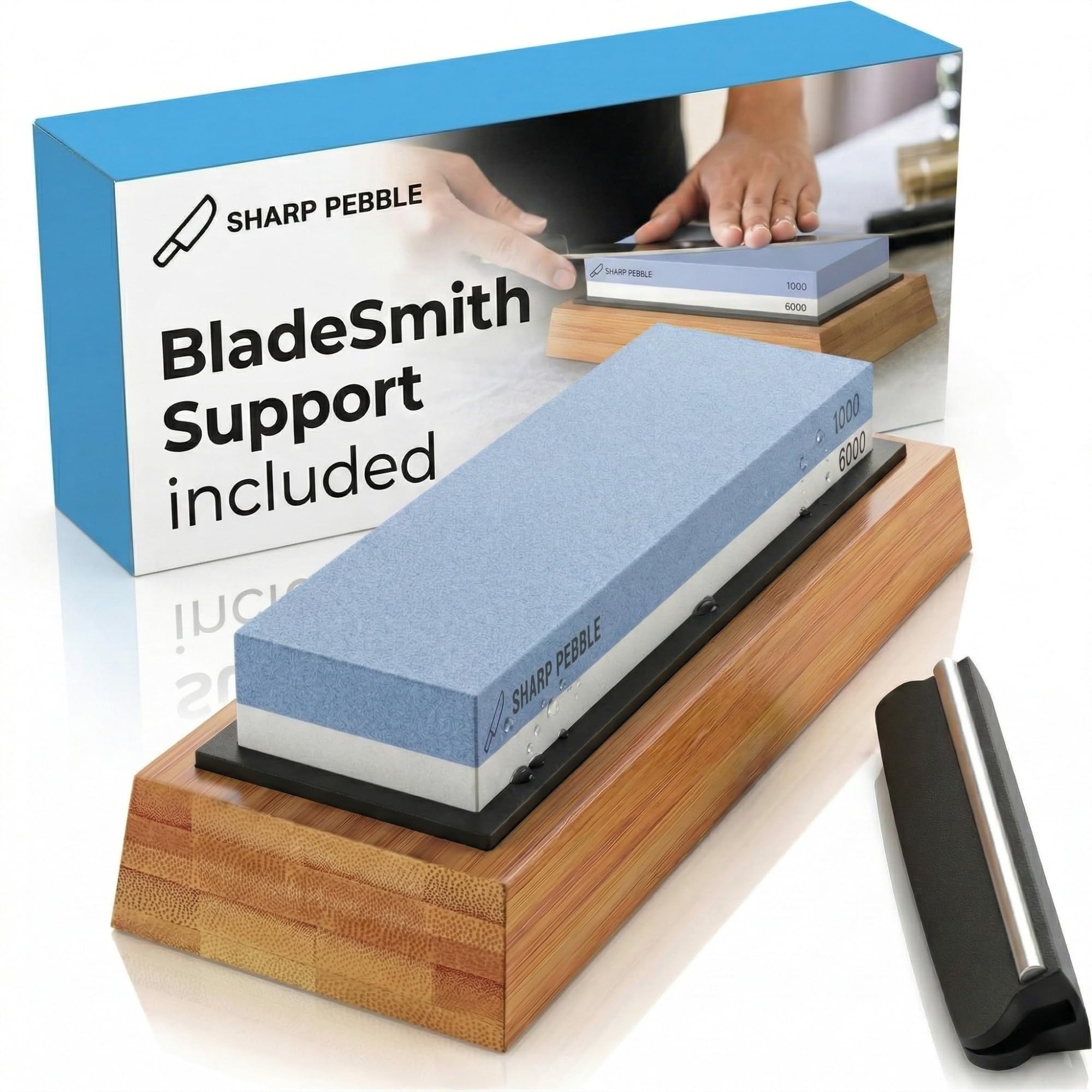
- The dual-grit stone combines 1000 and 6000 grit surfaces.
- An angle guide, bamboo base, and manual are included.
- Water-based sharpening does not require oil.
Best For: Home cooks learning whetstone sharpening who want an angle guide and a polishing grit.
Sharp Pebble 400/1000 Grit Whetstone Kit
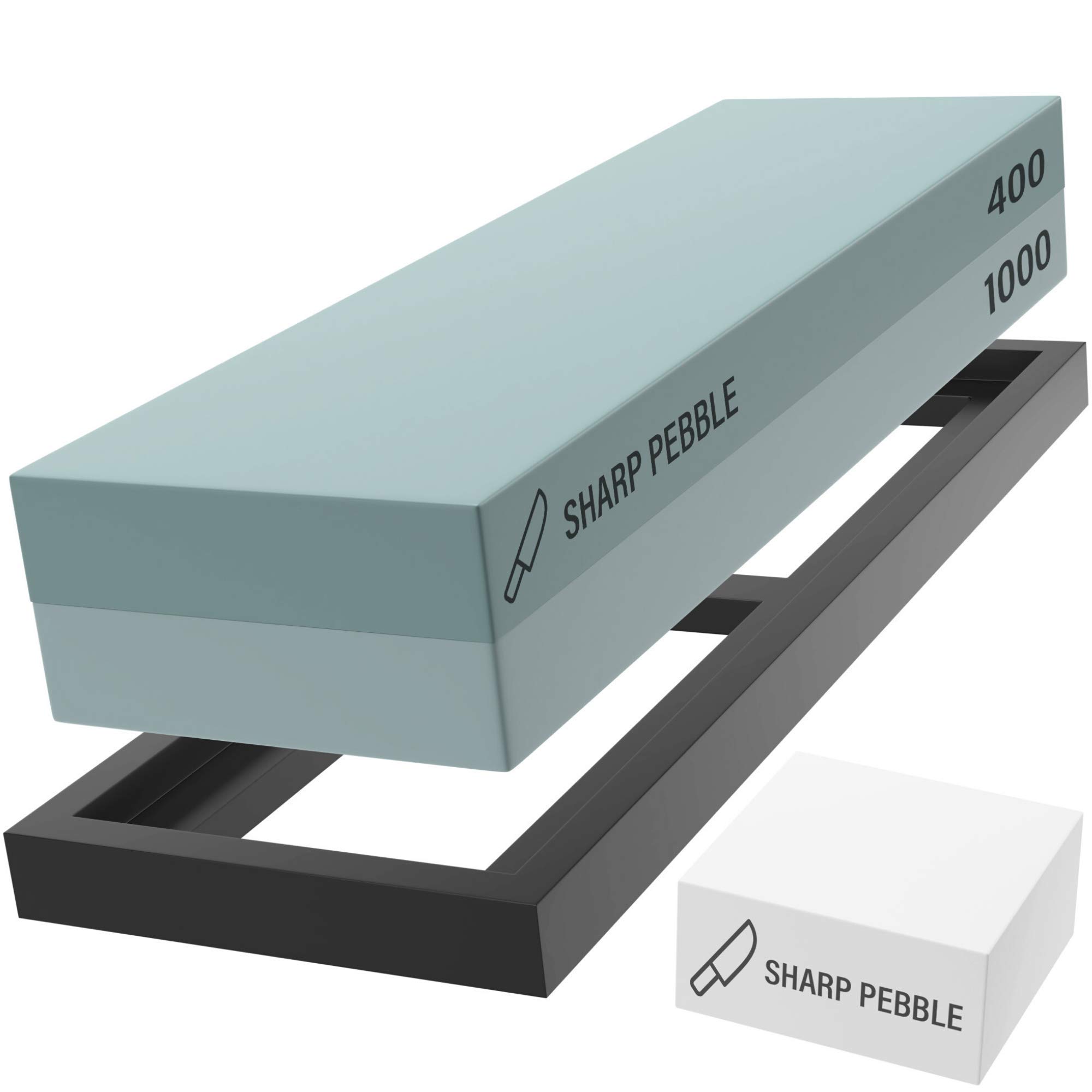
- The 400/1000 grit stone pairs edge repair with refinement.
- The kit includes a flattening stone and non-slip base.
- Water-based sharpening requires no honing oil.
Best For: Home cooks who need to repair duller edges and maintain the stone surface over time.
Sharp Pebble 1000/6000 Grit Angle-Guide Whetstone
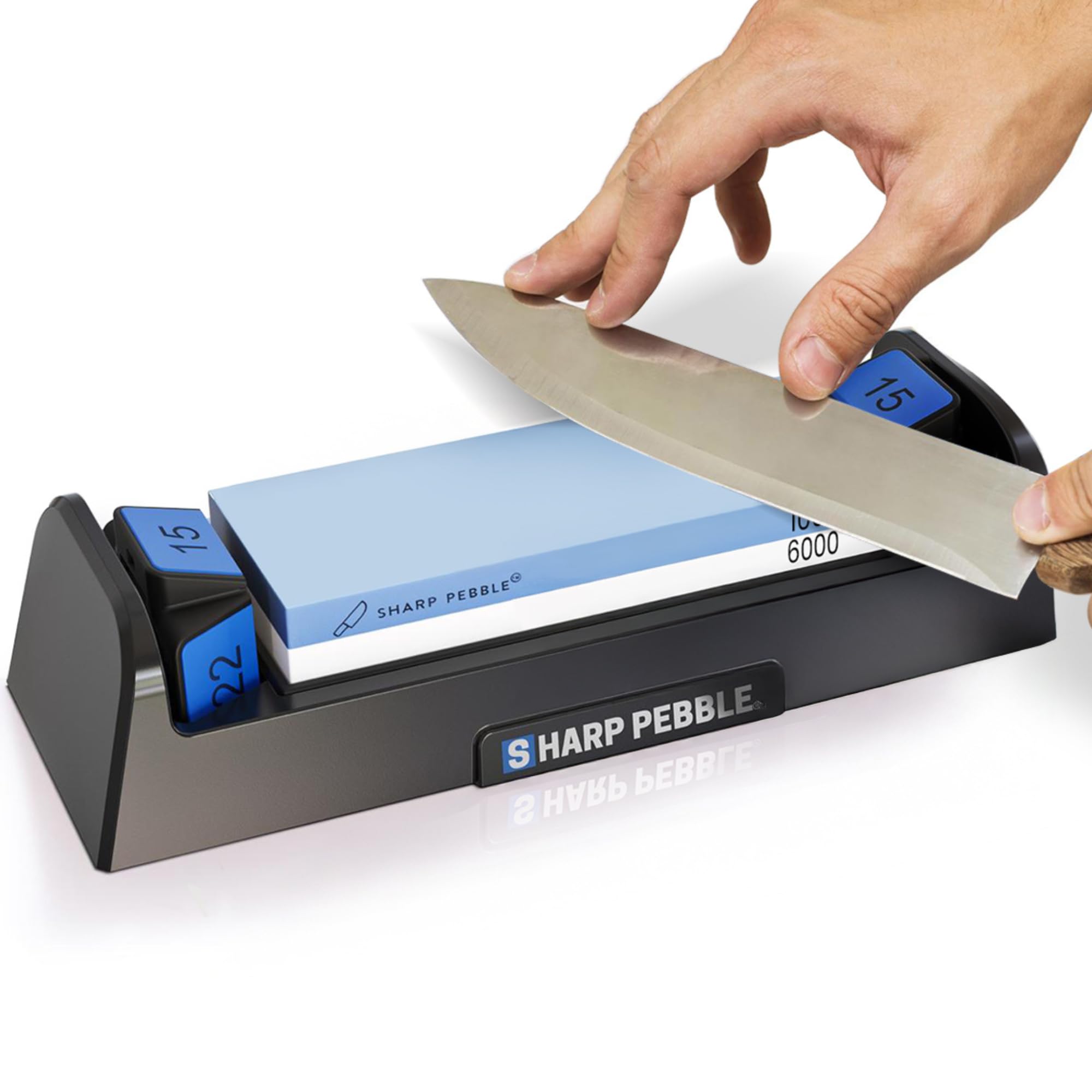
- Four built-in angle guide settings are available.
- The 1000/6000 grit surfaces handle sharpening and refinement.
- The stable base and water-only use support easier setup and cleanup.
Best For: Beginners who want a waterstone with multiple built-in angle settings.
Work Sharp Professional Precision Adjust Kit
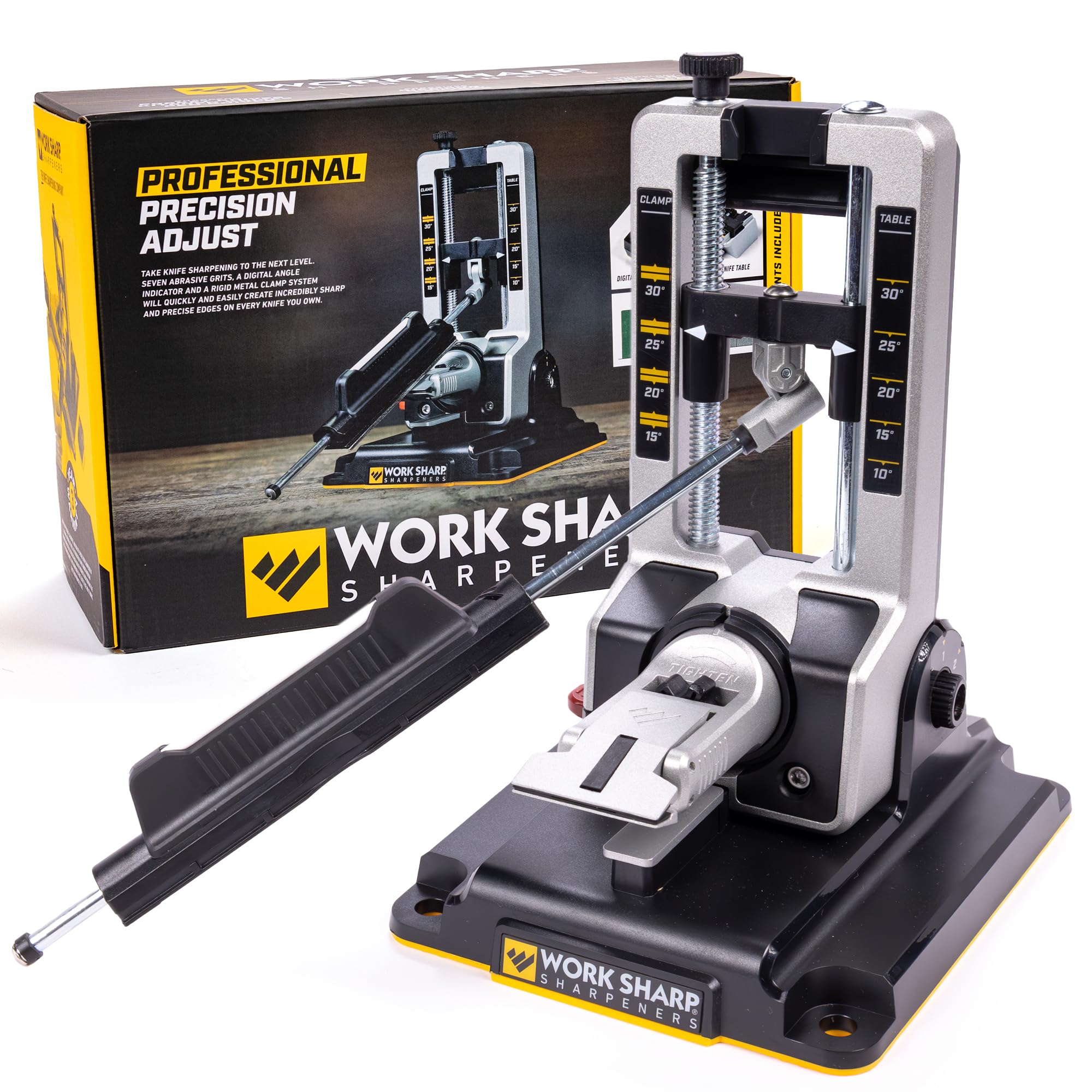
- Seven abrasives include five diamond grits, ceramic, and a strop.
- The digital indicator supports angle adjustment from 15 to 30 degrees.
- The metal system is designed for knives and tools.
Best For: Enthusiasts who want a guided system with a broad abrasive selection and angle adjustment.
Work Sharp Electric Kitchen Knife Sharpener
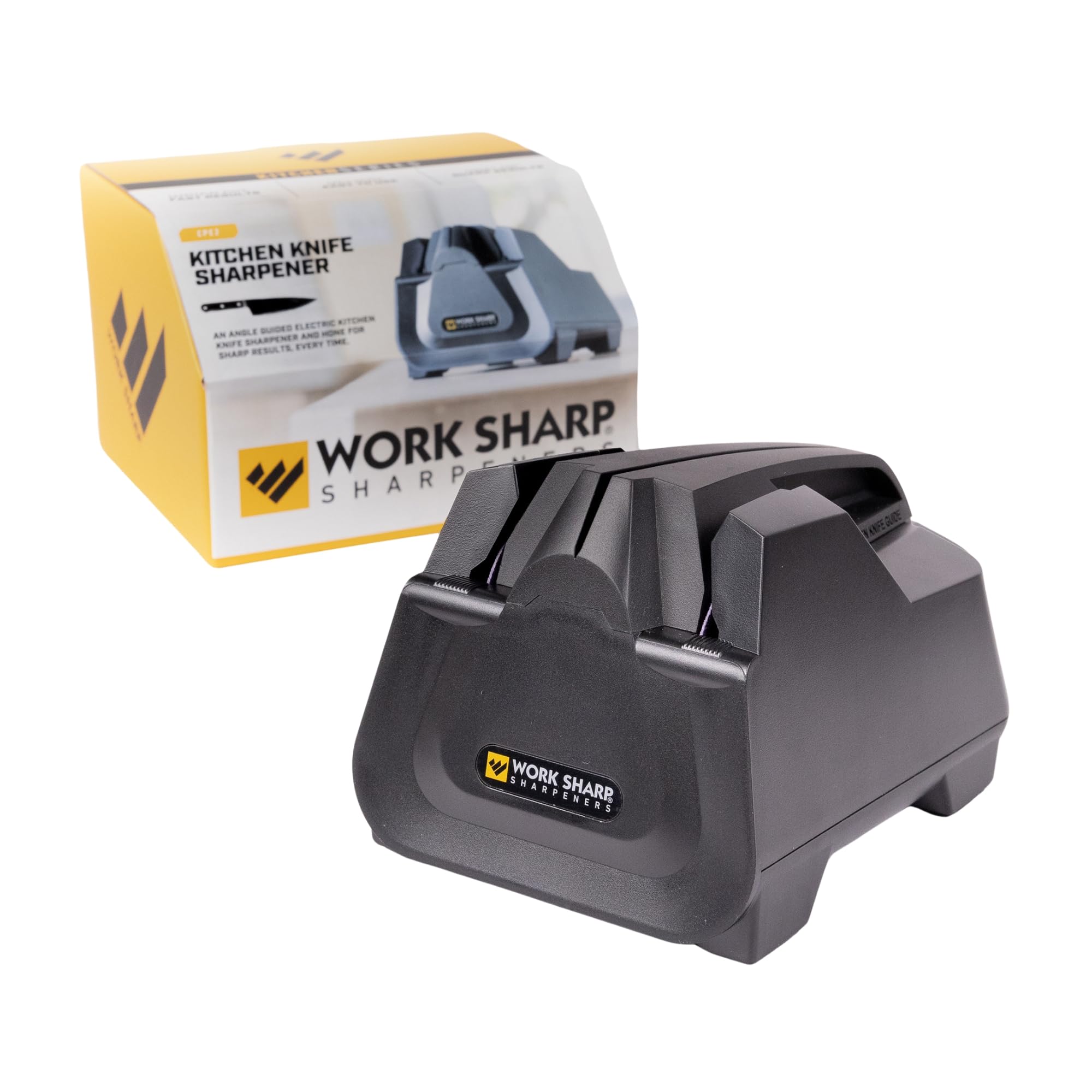
- Guided sharpening automates the angle.
- A built-in ceramic wheel is included for daily honing.
- It is designed for serrated edges and scissors as well as kitchen knives.
Best For: Cooks who want guided powered sharpening for kitchen knives, serrated edges, and scissors.
Work Sharp Benchstone Knife Sharpener
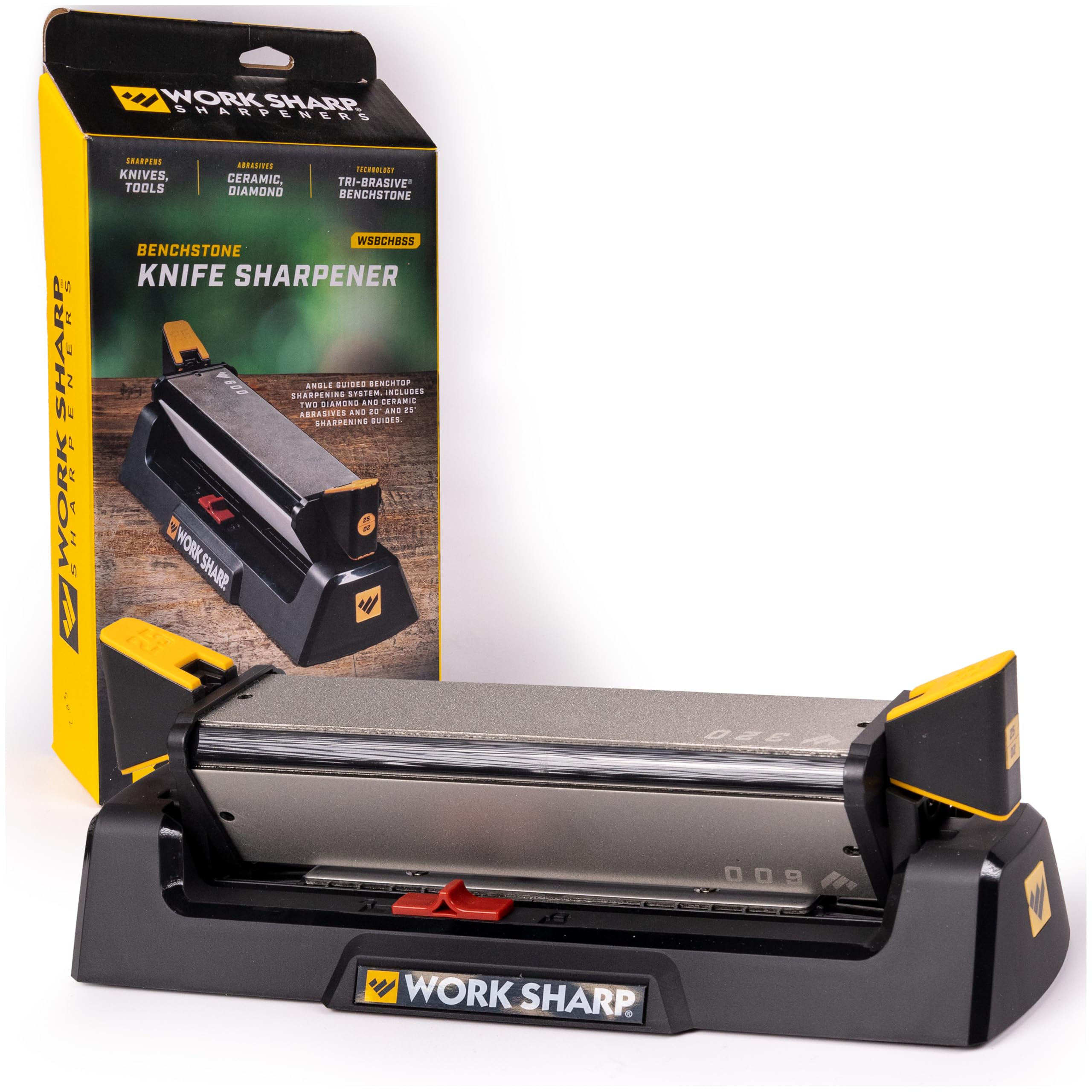
- Three abrasive sides include medium and fine diamond plus ceramic.
- The guides can be set at two angles or removed.
- Pivot response follows the blade curve and can be locked.
Best For: Pocket-knife and hunting-knife owners who want a manual guided benchstone.
Orange Ninja 4-Stage Knife Sharpener
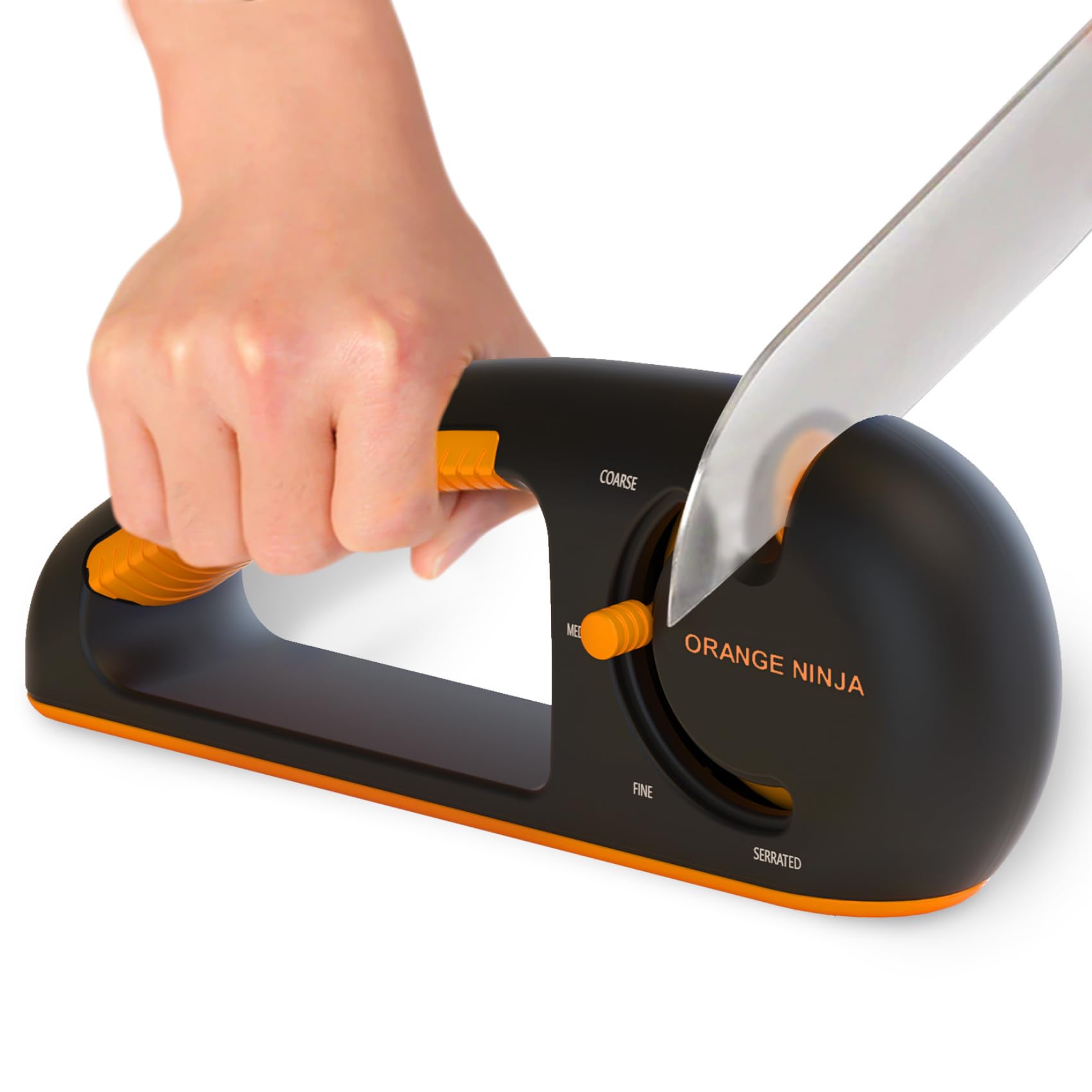
- Four slots cover repair, sharpening, polishing, and serrated edges.
- The sharpener works for right- and left-handed users.
- The product includes guidance not to push the blade back and forth.
Best For: Home cooks who want a manual pull-through sharpener with a serrated-knife slot.
Versatile Electric Belt System
Work Sharp MK2 Electric Knife Sharpener – Adjustable 2-Speed Knife Sharpening System for Kitchen Knives, Pocket Knives, Scissors, Axes & Garden Tools
The Work Sharp MK2 uses flexible abrasive belts and a two-speed motor to sharpen kitchen knives, pocket knives, scissors, axes, and garden tools. Its edge guide supports the knife toward the tip, while belt flexibility accommodates different blade shapes, including serrated edges.
The second speed gives more control for heavier sharpening or grinding jobs. This is the broadest-use powered option here, but it is larger in scope than a simple countertop touch-up tool.
Choose it if you also maintain outdoor tools and are comfortable using a motorized sharpener.
Best For: Home cooks and tool owners who want one powered system for kitchen knives and outdoor edges.
| Pros | Cons |
|---|---|
|
|
Choose the MK2 if you want a powered sharpener that can also handle axes, mower blades, and garden tools. Its range comes with a more involved setup than a handheld pull-through or rod, and the product details do not identify the belt grits included.
Check the belt package and available workspace before buying. If you only need kitchen knife maintenance, a compact stone or rod may be easier to store and manage.
Adjustable Angle Control
Work Sharp Precision Adjust Knife Sharpener Kit - Fixed Angle Sharpening System for Kitchen & Pocket Knives - Professional Guided Knife Sharpening Tool
The Precision Adjust uses a knife clamp and three-sided abrasive jig to guide manual sharpening. Its angle adjusts from 15 to 30 degrees in one-degree increments, giving more control over the edge geometry than a fixed-angle pull-through.
The tri-abrasive rod switches between coarse and fine diamond surfaces and fine ceramic. It also supports serrated knives.
This system suits someone willing to clamp a blade and work through sharpening deliberately. It takes more setup than a honing rod, but provides adjustable angles for different knives.
Best For: Cooks and pocket-knife owners who want repeatable manual angle settings.
| Pros | Cons |
|---|---|
|
|
Pick this kit if adjusting the sharpening angle matters and you want a guided manual system. The clamp and jig require more setup than a stone used freehand, while the three-sided rod keeps the abrasive changes straightforward.
Check whether its included abrasive selection covers your usual maintenance needs; the supplied details identify coarse and fine diamond plus fine ceramic, but do not give their grit numbers. Serrated-knife support is documented, making it more flexible than a straight-edge-only pull-through.
Beginner Waterstone Kit
Sharp Pebble Premium Whetstone Knife Sharpening System – 1000/6000 Grit Whetstone Knife Sharpener & Honing Kit with Angle Guide & Non-Slip Bamboo Base – Guided Beginner Instructions
This Sharp Pebble kit includes a 1000/6000-grit whetstone, angle guide, bamboo base, and instruction manual. It uses water-based sharpening, so honing oil is not needed.
The guide helps position the blade, while the two grits offer a sharpening and polishing sequence: 1000 grit for dull or damaged edges and 6000 grit for polishing. A whetstone requires hands-on technique and cleanup; check whether the included angle guide suits your knives and sharpening habits.
Best For: Home cooks learning whetstone sharpening who want an angle guide and a polishing grit.
| Pros | Cons |
|---|---|
|
|
This kit fits cooks who want a guided entry into whetstone sharpening and value a fine finishing grit. Its 1000/6000 pairing covers duller edges and finishing, while the water-based setup calls for handling and drying a wet stone after use.
Check the guide's fit with your knives and whether a separate flattening accessory is needed for your maintenance routine.
Edge Repair With Stone Flattener
Sharp Pebble Premium Whetstone Knife Sharpening Stone 2 Side Grit 400/1000 Wetstone Kit -Wetstone Kitchen Knife Sharpener with Flattening Stone & NonSlip Rubber Base
This waterstone kit combines 400 and 1000 grit surfaces with a flattening stone, non-slip rubber base, and step-by-step guide. The coarser 400 grit is intended for dull or damaged edges, while 1000 grit refines the result.
Unlike a pull-through sharpener, a whetstone requires controlled strokes and some cleanup, but the included flattener helps maintain the stone as it wears. It can also be used on several non-kitchen blades and tools.
Consider it if repair and surface maintenance are priorities in your kitchen sharpening setup.
Best For: Home cooks who need to repair duller edges and maintain the stone surface over time.
| Pros | Cons |
|---|---|
|
|
Choose this kit when edge repair and stone upkeep matter more than a polished finishing grit. Its 400/1000 pairing works on duller edges, and the flattening stone addresses a maintenance need that some starter kits leave out.
Plan for water cleanup and practice with the guide, and check the stone size if you need to sharpen larger blades.
Built-In Angle Guides
Sharp Pebble Complete Whetstone Knife Sharpening System – 1000/6000 Grit Wet Stone Sharpener Kit with Built-In Angle Guides (15°/17°/20°/22°) – Beginner-Friendly
This Sharp Pebble whetstone system combines 1000 and 6000 grit surfaces with built-in angle guides set at 15, 17, 20, or 22 degrees. The 1000 grit is used for dull blades, and 6000 grit refines the edge.
A non-slip base helps stabilize the stone, while water-only sharpening avoids oil. The preset guides reduce the need to estimate an angle by hand, though they offer set positions rather than continuous adjustment.
It is designed for both German- and Japanese-style knives. Check that one of the available settings matches your intended sharpening approach.
Best For: Beginners who want a waterstone with multiple built-in angle settings.
| Pros | Cons |
|---|---|
|
|
This is a good fit for a beginner who wants a whetstone and prefers preset angle guidance to freehand sharpening. Its four settings give useful choice, but they do not provide the continuous one-degree adjustment of Work Sharp's clamp system.
The 1000/6000 grit pairing serves routine edge work and refinement, while the non-slip base supports a steady setup. Confirm the angle options suit your knives and check how you will flatten the stone as it wears.
Seven-Abrasive Guided System
Work Sharp Professional Precision Adjust Knife Sharpener Kit - Complete Sharpening System for Kitchen, Pocket & Hunting Knives - Premium Angle-Guided Sharpening
The Professional Precision Adjust is a metal angle-guided system with seven abrasives: five diamond grits, fine ceramic, and a leather strop. Its digital angle indicator adjusts from 15 to 30 degrees, so users can select an angle for different knives or tools.
The range supports edge repair through polishing without needing a separate stone progression. This is a more elaborate setup than a basic kitchen sharpener, and its breadth may be unnecessary for someone who only wants quick touch-ups.
Consider it when varied grit choices and angle control are central to your sharpening routine.
Best For: Enthusiasts who want a guided system with a broad abrasive selection and angle adjustment.
| Pros | Cons |
|---|---|
|
|
Choose this kit if you sharpen enough knives or tools to make seven abrasive options useful. Its digital angle indicator and 15-to-30-degree adjustment offer detailed control, while the metal construction and broad grit range make the setup more involved than a rod or whetstone.
The details do not confirm serrated-blade compatibility or case inclusion, so check those points if they matter to your routine. For occasional kitchen touch-ups, a simpler system may be easier to use.
Push-Button Kitchen Sharpening
Work Sharp Electric Kitchen Knife Sharpener - Get knives ready for cookouts and BBQ's- Fits in Kitchen Drawer, Sharpens every time, fast & easy
The Work Sharp Electric Kitchen Knife Sharpener automates the sharpening angle with a guided, push-button process. Premium abrasives sharpen dull knives, and a built-in ceramic hone wheel supports daily edge maintenance.
It is designed for kitchen knives, serrated edges, scissors, and shears, making it a focused powered option for a busy kitchen. Unlike a whetstone, it asks for less manual angle control, but it does not have the broad outdoor-tool range of the MK2.
Consider it if convenience in kitchen maintenance matters more than a manual stone workflow.
Best For: Cooks who want guided powered sharpening for kitchen knives, serrated edges, and scissors.
| Pros | Cons |
|---|---|
|
|
Pick this model if you want powered kitchen sharpening with guided operation and a built-in honing stage. Its focus on kitchen knives, serrated edges, scissors, and shears is useful for a home cooking setup, while the MK2 covers a wider range of outdoor tools.
The supplied details do not identify abrasive grits, so check whether the sharpening stages match your expectations. It is a practical choice when repeated manual angle control is not appealing.
Compact Benchstone With Angle Guides
Work Sharp Benchstone Knife Sharpener, 3 sided for faster manual pocket or hunting knife sharpening
The Work Sharp Benchstone combines three abrasive faces with optional angle guides and a pivot-response feature that follows a blade's curve. Its medium and fine diamond plates restore an edge, while the fine ceramic surface provides a finishing stage.
Guides can be set to 20 or 25 degrees or removed for freehand sharpening. The pivot can also be locked for a rigid surface when working on tools.
It is a flexible manual option, though the listed default guide settings differ from systems with broader angle adjustment. Check whether optional guides are needed for your knives.
Best For: Pocket-knife and hunting-knife owners who want a manual guided benchstone.
| Pros | Cons |
|---|---|
|
|
This benchstone suits owners of pocket and hunting knives who want a manual system with guided or freehand options. Its pivot response follows blade curves, and the lockable surface accommodates tool sharpening.
The included guide positions are 20 and 25 degrees; 15- and 17-degree guides are available separately. Check the angles you need before buying, since this kit does not provide the same built-in range as Work Sharp's adjustable clamp systems.
Four-Stage Serrated Edge Tool
Orange Ninja 4-Stage Knife Sharpener & Serrated Knife Sharpener– Repairs, Sharpens & Polishes Blades with Ergonomic Non-Slip Grip
The Orange Ninja uses four slots for coarse repair, medium sharpening, fine polishing, and serrated blades. Its manual pull-through design is intended to simplify sharpening with a few strokes, and an ergonomic handle accommodates right- or left-handed use.
It covers a range of kitchen knives plus pocket and hunting knives. Compared with a whetstone, it asks for less angle control but gives less adjustment over the sharpening process.
The instructions say not to push the knife back and forth, so follow the intended stroke direction. Consider it for simple multi-stage maintenance across straight and serrated kitchen blades.
Best For: Home cooks who want a manual pull-through sharpener with a serrated-knife slot.
| Pros | Cons |
|---|---|
|
|
This pull-through is for cooks who want multiple sharpening stages and a separate serrated slot without learning a whetstone technique. Its coarse, medium, and fine stages offer a simple sequence, while the design does not provide the angle adjustment available in guided clamp systems.
The instructions specifically say not to push the knife back and forth, so stroke technique matters. Check whether its slot-based approach suits your knives and the level of edge control you want.
How to Choose Knife Sharpeners
How We Picked Knife Sharpeners
The selected options cover distinct ways to restore and maintain an edge: guided manual systems, whetstones, honing rods, pull-through sharpeners, and electric machines. We favored products with a clear use case in the supplied details, such as a coarse stone for dull edges, a built-in ceramic hone for kitchen maintenance, or adjustable angle control for repeatable sharpening.
Blade range matters. Some picks focus on kitchen knives, while others also support pocket knives, serrated blades, scissors, or outdoor tools.
We included those broader tools where their features make them useful to cooks maintaining more than one kind of blade.
Comparing Knife Sharpeners
The main choice is between convenience and control. Powered systems automate more of the sharpening process, while pull-through models provide a guided sequence.
Whetstones and clamp systems involve more hands-on setup and technique.
A whetstone's grit pairing affects its role. The 400/1000 kit is aimed at duller or damaged edges and includes a flattener; the 1000/6000 stones add a finer finishing stage.
The Work Sharp Professional kit offers several abrasives with adjustable angles, while the Benchstone uses three faces and a narrower set of included angle guides.
| Product | Standout features | Best for |
|---|---|---|
| Work Sharp MK2 Electric Knife SharpenerCheck Price |
| Home cooks and tool owners who want one powered system for kitchen knives and outdoor edges. |
| Work Sharp Precision Adjust Knife Sharpener KitCheck Price |
| Cooks and pocket-knife owners who want repeatable manual angle settings. |
| Sharp Pebble 1000/6000 Grit Whetstone KitCheck Price |
| Home cooks learning whetstone sharpening who want an angle guide and a polishing grit. |
| Sharp Pebble 400/1000 Grit Whetstone KitCheck Price |
| Home cooks who need to repair duller edges and maintain the stone surface over time. |
| Sharp Pebble 1000/6000 Grit Angle-Guide WhetstoneCheck Price |
| Beginners who want a waterstone with multiple built-in angle settings. |
| Work Sharp Professional Precision Adjust KitCheck Price |
| Enthusiasts who want a guided system with a broad abrasive selection and angle adjustment. |
| Work Sharp Electric Kitchen Knife SharpenerCheck Price |
| Cooks who want guided powered sharpening for kitchen knives, serrated edges, and scissors. |
| Work Sharp Benchstone Knife SharpenerCheck Price |
| Pocket-knife and hunting-knife owners who want a manual guided benchstone. |
| Orange Ninja 4-Stage Knife SharpenerCheck Price |
| Home cooks who want a manual pull-through sharpener with a serrated-knife slot. |
Choosing a Kitchen Knife Sharpener by Blade
Check whether the sharpener suits the blades in your drawer. The Work Sharp Electric Kitchen model includes support for kitchen knives, serrated edges, scissors, and shears.
The Orange Ninja has a separate serrated slot, while the Sharp Pebble adjustable pull-through is specified for straight-edge blades only. If you also maintain axes or garden tools, the MK2's belt system covers a wider tool range.
For a honing rod, consider its surface and intended role. The Messermeister's fine ceramic surface is for regular touch-ups; it is not described with coarse stages for repairing a badly dulled edge.
A rod is convenient for maintenance, but a stone or guided system is more suited to a fuller sharpening progression.
Which Knife Sharpening System Fits Your Routine?
A beginner choosing a whetstone may prefer built-in angle guides or an included guide and base. The Sharp Pebble options combine those supports with water-based sharpening, though their grit combinations differ.
If you prefer a guided clamp, Work Sharp's Precision Adjust systems offer angle adjustment and abrasive rods; the Professional version adds seven abrasives and a digital angle indicator.
Think about storage and setup as well as sharpening. A countertop electric machine is ready for repeated kitchen use, while a stone needs a stable surface and water cleanup.
A compact rod hangs by its handle, and a pull-through sharpener keeps its stages in one handheld tool.
Who Should Buy Which Knife Sharpener?
Choose a whetstone if you want a manual sharpening routine with distinct grit stages, and a clamp-guided system if adjustable angles are central to your process. Pick an electric model for powered convenience, especially when you maintain multiple blade types.
A honing rod suits cooks who mainly need regular touch-ups.
Before buying, verify serrated-blade support, angle range, abrasive stages, and what accessories are included. Those details differ across these knife sharpeners and determine whether a model is suited to your knives, your sharpening habits, and the amount of setup you want.